Platinum Roofing — licensed & insured roofing in Alpharetta, GA
Call (770) 419-5714
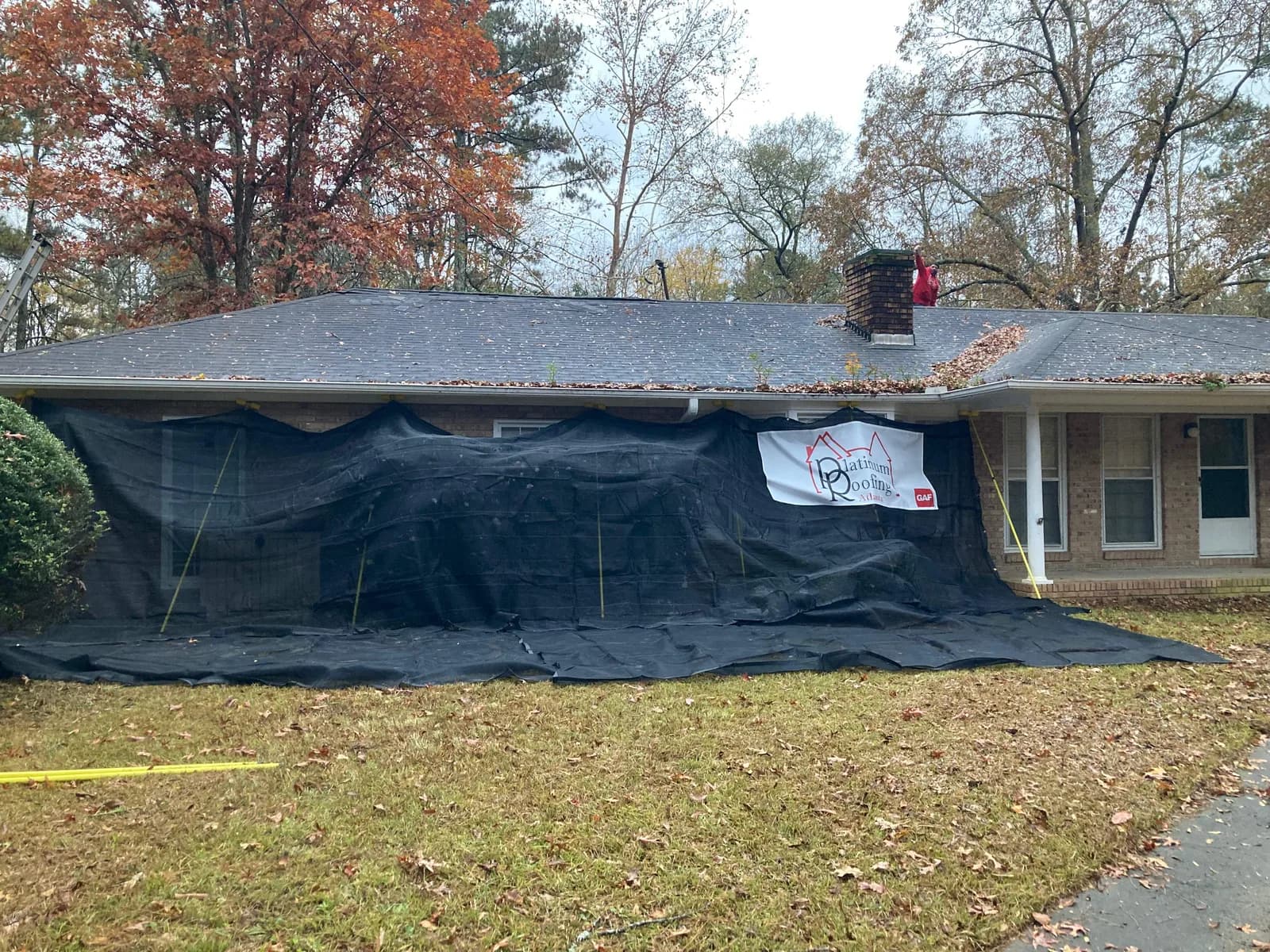
Platinum Roofing crew installing an emergency tarp over storm-damaged roofing in North Georgia

24/7 Emergency Roofing in Alpharetta & North Georgia

When a storm tears open your roof or a tree comes through it, every hour matters — and Platinum Roofing answers emergency calls 24/7 across Alpharetta and the North Atlanta metro. Our first priority is always the same: stop water from getting into your home and stabilize the damage before it multiplies. We’ve responded to North Georgia’s worst weather since 2000, and we know how to move fast without cutting corners.

What Counts as a Roofing Emergency

A roofing emergency is any situation where your roof can no longer keep water out and waiting until business hours risks serious interior damage. The most common in our area are storm-blown sections of shingles or decking, fallen trees and large limbs punching through the roof, sudden active leaks during heavy rain, and wind that peels back ridge or hip sections and exposes the underlayment.

The danger isn’t only the initial breach — it’s what follows. Once water is inside, it spreads into insulation, drywall, framing, and electrical, and in Georgia’s humidity it can start growing mold within a day or two. Rapid stabilization is what separates a manageable repair from a gutted-room restoration.

Rapid Response and Emergency Tarping

When you call, we triage the situation over the phone, give you steps to protect what’s inside, and dispatch a crew. On arrival, our standard emergency measure is professional tarping — securing heavy-duty tarps over the breach, anchored and sealed so they don’t become a sail in the next gust. A tarp installed correctly buys you the days needed to plan a proper repair without water continuing to pour in.

There’s a real difference between a tarp thrown over a roof and one installed to hold. We anchor along battens and lap the material so wind-driven rain can’t get underneath, and we account for the roof slope so water sheds off rather than pooling. We also address immediate hazards — like a downed limb still resting on the structure — within the limits of what’s safe to do in the moment.

Fallen Tree and Structural Damage

North Georgia’s tall pines and hardwoods are a leading cause of catastrophic roof damage, especially when saturated ground and high wind combine in a summer storm. A tree impact often damages not just shingles but the decking and rafters beneath, and sometimes the framing itself, so the stabilization approach is different from a simple shingle blow-off.

We secure the opening, assess whether the structure is sound enough to tarp safely or whether shoring is needed first, and document the full extent of the damage — including what’s hidden in the attic and framing. That documentation matters enormously later, because tree-impact claims hinge on showing the true scope rather than just the hole you can see from the yard.

Temporary Stabilization vs. Permanent Repair

Emergency response and permanent repair are two distinct phases, and conflating them leads to bad outcomes. The emergency phase is about stopping the bleeding — tarping, removing immediate hazards, and preventing further water intrusion. It is not the time to make final material decisions or rush a permanent fix in the dark and the rain.

Once the home is stabilized and dry, we return in daylight to assess the full damage, develop a proper repair or replacement scope, and execute it correctly with matched materials and full warranty coverage. Because we handle both phases, nothing falls through the cracks between an emergency contractor and a repair contractor — the same company that tarped your roof sees the job through to completion.

Working With Insurance After a Storm

Storm and tree damage is typically covered by homeowners insurance, and what you do in the first hours affects how smoothly that process goes. Most policies expect you to take reasonable steps to prevent further damage — which is exactly what emergency tarping is — so keep receipts and don’t skip stabilization waiting on an adjuster. Photograph everything before and after, and keep any tarp invoices.

We document the emergency response and the full damage in detail, photographing the breach, the interior, and the hidden structural impact so the scope is clear and defensible. We’re happy to meet your adjuster on-site and walk through what we found, so the assessment reflects the real damage rather than what’s visible from the ground. As a Licensed & Insured, Approved Contractor, our documentation is held to a professional standard.

Our Process

The Emergency Roofing Process

  1. 1

    Emergency Call & Triage

    You reach a real person any hour; we assess the situation by phone, advise immediate protective steps, and dispatch a crew.

  2. 2

    On-Site Stabilization

    We secure the breach with professional tarping and address immediate hazards to stop water intrusion fast.

  3. 3

    Damage Documentation

    We photograph the breach, interior, and hidden structural impact in detail to support your insurance claim.

  4. 4

    Daylight Assessment

    Once stabilized, we return to evaluate the full scope and build a proper repair or replacement plan with you.

  5. 5

    Permanent Repair

    The same team completes the permanent fix with matched materials and full warranty — no handoff between contractors.

A pine came down across the back of our house at 11pm during a July storm. I called Platinum and someone actually picked up, talked me through it, and had a crew tarping by early morning so we didn’t lose the whole upstairs. They documented everything for our insurance and then did the full repair. Lifesavers, truly.
Marcus B.Emergency roofing, Woodstock

Questions

Emergency Roofing FAQs

How fast can you get to my home after a storm?

We answer emergency calls 24/7 and dispatch as quickly as conditions allow across the North Atlanta metro. Response times stretch during widespread storm events when many homes are hit at once, so calling early gets you in the queue sooner — and we’ll give you an honest arrival estimate when you call.

How long will an emergency tarp last on my roof?

A professionally installed tarp typically holds for several weeks to a couple of months, which is meant to bridge you to a permanent repair — not to serve as a long-term roof. Sun and wind degrade tarps over time, so we schedule the permanent fix as soon as the home is stabilized and the weather and claim allow.

Should I call you or my insurance company first after roof damage?

Call us first if water is actively entering your home — stopping the intrusion is urgent and most policies expect you to prevent further damage. You can open the claim right after. The emergency tarping we do is exactly the kind of mitigation insurers want to see, so it works in your favor.

A tree fell on my roof — is it safe to stay in the house?

If there’s sagging, a large opening, or any sign the structure is compromised, leave and call us immediately. We assess whether the roof is sound enough to tarp safely or whether shoring is needed first. Don’t go into the attic under a tree-impacted area until it’s been evaluated.

Do you charge extra for after-hours or weekend emergency calls?

Emergency response involves dispatching a crew on short notice outside normal hours, and we’ll be transparent about any after-hours rate when you call — no hidden surprises. What you’re paying for is fast stabilization that often prevents far costlier interior damage down the line.

What should I do to protect my home before your crew arrives?

Move valuables and electronics out from under the leak, place buckets or containers to catch water, and if it’s safe, lay down towels and pull back rugs. Don’t climb onto a wet or damaged roof yourself. Photograph everything you can safely reach — those images help with both the repair and your claim.

Ready for Emergency Roofing?

Get a free, no-obligation emergency roofing estimate from North Georgia's 4th-generation roofers.