Storm Damage
What To Do After a Storm Damages Your Roof
By Robert Shelby · May 2, 2026 · 7 min read
Robert Shelby, a 4th-generation roofer with 24+ years of experience leading Platinum Roofing in Alpharetta, Georgia, explains that after a storm damages your roof you should take six steps in order: ensure everyone's safety first, document the damage with photos and video, mitigate further water damage inside, arrange professional emergency tarping, call a licensed roofer for a full inspection, and then file your insurance claim promptly. In Georgia's humid climate, speed matters enormously — mold can begin growing on wet decking and drywall within 24 to 48 hours. Here's exactly what to do, in the right order, so you protect both your home and your insurance claim.
Step 1: Make Sure Everyone Is Safe
Before anything else, check on your family. Stay away from any sagging ceilings, standing water near electrical outlets, or downed power lines outside. If a ceiling is bulging with trapped water or you smell gas, get everyone out and call the professionals. Never climb onto a wet, storm-damaged roof yourself — that's the single most common way homeowners get seriously hurt after a storm. The roof can wait; your safety can't.
Step 2: Document the Damage Thoroughly
Once it's safe, document everything. Insurance adjusters pay claims based on evidence, so the more you have, the smoother your claim goes.
- Take photos and video of the roof (from the ground), the attic, ceilings, walls, and any damaged belongings.
- Capture wide shots and close-ups — a missing-shingle slope from the yard, then the water stain on the bedroom ceiling.
- Note the date and time of the storm and any details you remember (hail size, wind, fallen limbs).
- Save receipts for anything you buy to protect your home (tarps, buckets, a hotel if you have to leave).
Do this before any cleanup or temporary repairs so you have a clear "before" record.
Step 3: Mitigate Further Damage Inside
Most insurance policies legally require you to take reasonable steps to prevent further damage — it's called your "duty to mitigate." Acting fast also protects your home from the secondary damage that's often worse than the storm itself.
- Move furniture, electronics, and valuables out of the affected area.
- Put buckets or bins under active drips and lay down towels.
- If water is pooling in a ceiling, a small relief hole over a bucket can prevent a larger collapse — but only if you can do it safely from below.
- Pull back wet rugs and start air circulation to slow mold.
Step 4: Arrange Professional Emergency Tarping — Fast
This is the step Georgia homeowners underestimate. In our heat and humidity, mold and mildew can take hold on wet wood and drywall within 24 to 48 hours. A properly installed tarp keeps water out until permanent repairs happen, and it stops a one-room problem from becoming a whole-house restoration job.
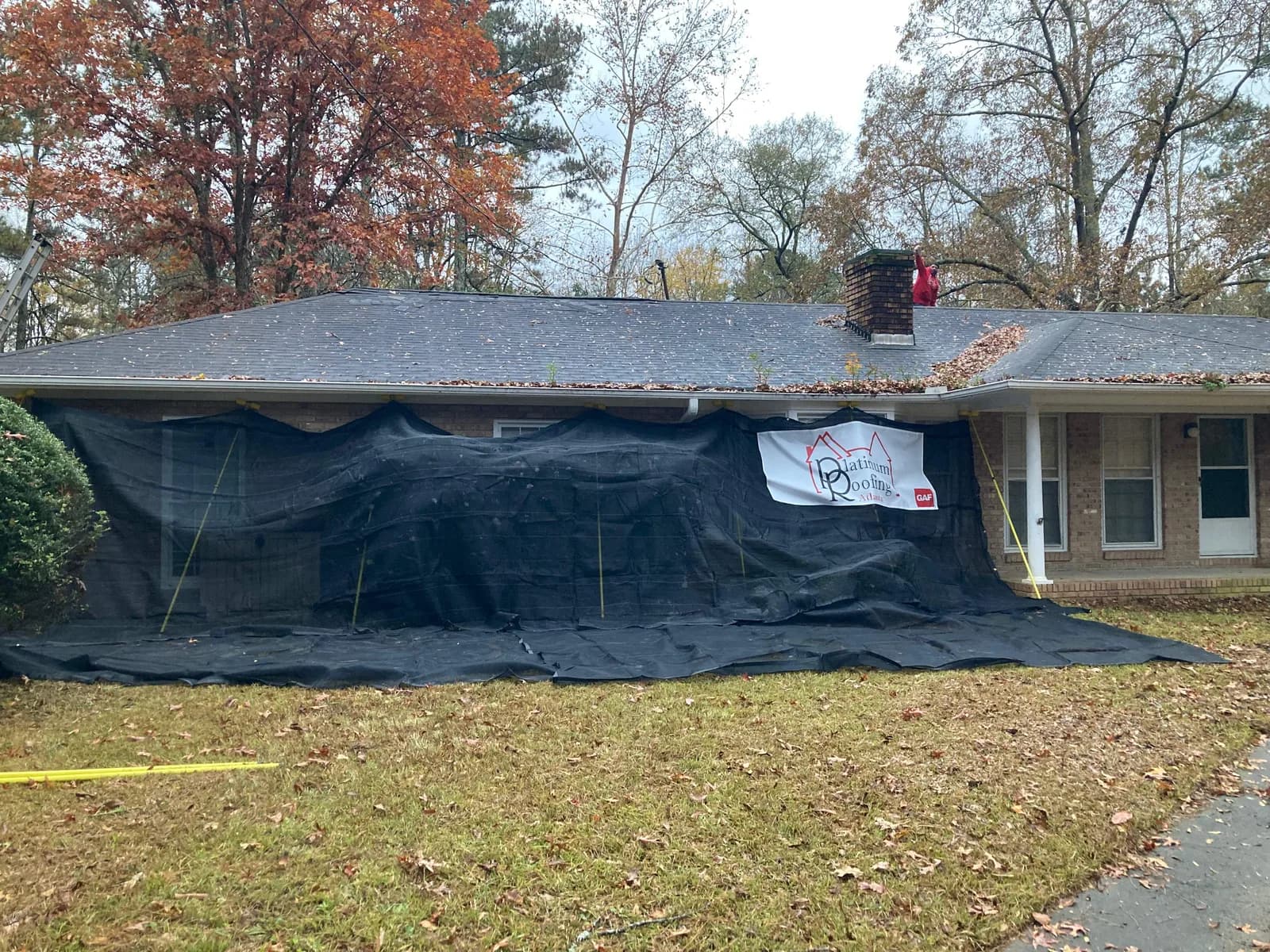
Professional tarping matters because a tarp that's improperly anchored will blow off in the next storm — or worse, channel water into a new area. Our emergency roofing crews secure tarps correctly so they actually hold, and we document the temporary repair for your insurance file. We serve homeowners across our service areas in metro North Atlanta, often the same day you call.
Step 5: Call a Licensed Roofer for a Full Inspection
Once your home is protected, get a professional roof inspection. A licensed roofer can spot damage you can't see from the ground — bruised or fractured shingles from hail, lifted flashing, cracked seals, and compromised decking. We provide a detailed written assessment with photos that you can hand directly to your insurance company.
If you've got an active leak that can't wait, our roof repair team can handle urgent fixes while the claim is being processed.
Beware of Out-of-Town Storm Chasers
After every big Georgia hailstorm, out-of-state "storm chaser" crews flood neighborhoods knocking on doors. Be cautious. Many use high-pressure tactics, demand money up front, do shoddy work, and are long gone by the time problems surface — leaving you with no warranty and no one to call. Always choose a licensed, insured, local roofer with a permanent address and a real track record in your community. We've been right here in Alpharetta serving North Atlanta since 2000.
Step 6: File Your Insurance Claim Promptly
With documentation and a professional inspection in hand, file your claim:
- Call your insurer as soon as possible. Many policies have deadlines for storm-damage claims, so don't wait. Report the date of loss and describe the damage.
- Provide your evidence — your photos, video, and the roofer's written report.
- Meet the adjuster. When the insurance adjuster comes out, it helps enormously to have your roofer there too, so nothing legitimate gets missed or undervalued.
- Understand what's covered. Most Georgia homeowner policies cover sudden storm, wind, and hail damage. They typically do not cover damage from age, neglect, or deferred maintenance — another reason documenting that the damage was storm-caused is so important.
- Keep all records — claim numbers, adjuster names, and every receipt.
Georgia's Storm Season: Know What's Coming
Metro Atlanta sits squarely in a region that sees frequent severe weather. Our peak hail and wind season runs roughly March through June, with strong thunderstorms and the occasional tornado, plus the tail end of hurricane season pushing tropical systems inland in late summer and fall. Hail as small as one inch — about a quarter — can bruise shingles in ways you won't notice for months, until granule loss and leaks show up. That's why I always recommend a post-storm inspection even if your roof looks fine from the driveway.
Get a Free Storm-Damage Inspection
If a storm just rolled through, don't wait for a small leak to become a ceiling collapse or a mold problem. Platinum Roofing offers free storm-damage inspections and fast emergency tarping across the 22 cities we serve in metro North Atlanta. We'll document everything, give you an honest assessment, and stand with you through the insurance process. Call (770) 419-5714 now or contact us — and if you have active water coming in, tell us it's an emergency and we'll prioritize you.
Frequently Asked Questions
How quickly should I tarp my roof after storm damage?
As fast as possible — ideally within hours. In Georgia's heat and humidity, mold can begin growing on wet wood and drywall within 24 to 48 hours. A properly installed professional tarp stops water intrusion and prevents a small problem from turning into an expensive restoration. We offer same-day emergency tarping across metro North Atlanta.
Will my insurance cover storm damage to my roof?
Most Georgia homeowner policies cover sudden damage from wind, hail, and storms. They generally do not cover damage from age, wear, or neglect, which is why documenting the storm event and getting a professional inspection right away is so important. Having a licensed roofer present when the adjuster visits helps ensure all legitimate damage is accounted for.
Should I hire the contractor who knocks on my door after a storm?
Be very careful. After major Georgia storms, out-of-town storm chasers canvass neighborhoods with high-pressure sales tactics, then disappear once the work is done, leaving you with no warranty. Always hire a licensed, insured, local roofer with a permanent address and an established reputation in your community. Platinum Roofing has served North Atlanta from Alpharetta since 2000.

About the Author
Robert Shelby
Robert Shelby is a 4th-generation roofing professional and the founder and CEO of Platinum Roofing, serving Alpharetta and North Georgia since 2000. Learn more about Robert →